BlogEducation
How to Choose a DDA Provider in Washington, DC: A Checklist for Families
|Mercyland Healthcare Inc.|7 min read

Choosing who supports your family member every day is one of the biggest decisions in DC’s disability services system, and families are often handed a long list with little guidance. This guide explains your right to choose and to change providers, where the official list lives, and the questions worth asking any agency before you decide. It is written so a family member or a Service Coordinator can forward it.
A few names you will see: DDS is the DC Department on Disability Services. Inside DDS, the Developmental Disabilities Administration (DDA) serves adults with intellectual and developmental disabilities. A provider is an agency approved to deliver waiver services. Your Service Coordinator is the DDA staff member who works with you on the Individual Support Plan (ISP), the plan that lists the services a person receives. DC has two waivers for these services: the IDD Waiver and the Individual and Family Supports (IFS) Waiver.
You have the right to choose, and to change
DC’s approved waivers say a participant may select any willing and qualified provider to deliver the waiver services in their plan (IDD Waiver, 2026; IFS Waiver, 2026). DDS policy puts it plainly: everyone who receives services from DDA has “the right to choose which providers support them” (DDA Transition Policy).
What that means in practice, according to the waivers:
- Your Service Coordinator must tell you about this choice at the ISP meeting, and again during the year if a change of provider needs to be considered.
- You get the list. The Service Coordinator gives the person a list of all qualified providers and the waiver services each one offers, and encourages you to interview or visit the agencies you are interested in. They can help you contact and interview providers, and they are responsible for helping when you want to change.
- No internet is not a barrier. If a family has no internet access or finds the DDS website hard to use, Service Coordinators print the documents and explain each service.
- The choice belongs to the person. The waivers give the choice to the person or their legal representative, and the person has the right to decide who is on their planning team. Family members are often central to that team, but the person’s own preferences lead.
- A denied choice can be appealed. DDS must give written notice of the right to a fair hearing if a participant is denied their choice of qualified provider.
Where to find the official list of providers
DDS publishes the list on its DDA HCA and Pre-Qualified Provider Listing page. As of this writing, the page holds two PDFs dated September 1, 2026:
- The waiver provider listing, organized by service (for example In-Home Supports, Companion Services, Day Habilitation, Respite Services). Look up the service in your ISP, then read the agencies listed under it.
- The Human Care Agreement provider list, which covers residential services such as Residential Habilitation, Supported Living and Host Home, and includes each agency’s contact details.
Check the “as of” date on the PDF you are reading.
DDS also posts each provider’s Provider Certification Review (PCR) reports, sorted alphabetically, on its PCR page. DDS describes the PCR as its annual check of whether a provider is qualified to deliver each waiver service, and says a provider rated less than satisfactory in a service may not provide that service. Each report lists the services reviewed, a score and overall rating for each, and the certification dates for each service. If the dates on the latest posted report have already passed, ask the provider for its most recent result.
The checklist: questions to ask any provider
Print this, or keep it open during calls and visits. A good provider will be glad you asked.
1. Certification and status
- Are you on the current DDS waiver provider listing for the exact service in our ISP?
- When was your most recent Provider Certification Review, and what rating did you get for this service? (You can check the posted report yourself.)
- Are you enrolled to provide this service under our waiver, IDD or IFS?
2. Which services you actually deliver
- Are you delivering this service to people right now, or only approved for it?
- Do you have staff available now in our part of the city? If not, when could you start?
- Can you work around the person’s existing schedule, such as a day program or job?
3. Staffing and consistency
For services such as In-Home Supports, DC’s IDD Waiver requires each worker to be at least 18, to have a criminal background check, CPR and First Aid certification and DDS training, and to be trained in the support needs in the person’s ISP (IDD Waiver, 2026). For several services, including Respite and Companion, the agency must also document that the person found each worker acceptable.
- How do you check that every worker meets these requirements?
- Will my family member meet a new worker before they start?
- Will the same staff come each time? What happens when a worker is sick or leaves?
- How much notice will we get about a schedule change?
4. Language access
DC’s waivers require each waiver provider to have a plan for serving people who do not speak English, and DDS monitors providers against its Language Access Policy.
- Do you have staff who speak our language? If not, how do you provide an interpreter?
- Are your forms, notices and complaint process available in our language?
- How will you communicate with a family member who is deaf or hard of hearing?
5. Incidents and safety
Providers must report incidents to DDS. Serious incidents, such as allegations of abuse or neglect, a serious injury, a missing person or an emergency hospital stay, must be reported right away; other reportable incidents by the end of the next business day. Providers must also tell the people they serve, and their parents or guardians, how they handle incidents (IDD Waiver, 2026).
- May I see your incident policy?
- If something happens, who will call me, and how fast?
- How do you train staff to recognize and report abuse, neglect and exploitation?
Under DDS policy, the person and their guardian are told about every serious incident and its investigation outcome. Anyone else is notified as set out in the ISP or a Supported Decision-Making Agreement (DDS Incident Management Policy, 2025). If you are a parent but not a guardian and want to be called, make sure the plan says so.
6. Complaints
Every DDA provider has its own formal complaint process, and you usually must use it first. If you disagree with the provider’s decision, DDA can review it. If you are afraid of how the provider will treat you, tell the DDA Complaint System Coordinator, and you may be able to file with DDA directly. Complaints usually must be filed within 90 days. Retaliation for filing a complaint is not allowed, and you can ask for a qualified interpreter at no cost (DDA Formal Complaint System FAQs; Consumer Rights).
- How do I file a complaint with you, and who decides it?
- How long do you take to respond?
7. Communication with the family
- Who is our main contact, and how do we reach them after hours?
- How will you share updates: calls, texts, email, a notebook?
- Will someone from your agency attend the ISP meeting?
- What do you share with family, given what the person has agreed to?
8. Changing providers
- If this does not work out, how do you handle a transfer to another agency?
- How will the person’s records move to the new provider?
For residential and day or employment services, DDS policy gives every person the chance to choose their provider at least once a year, and more often on request. It asks for at least 30 days’ notice before a change, requires the current provider to share the person’s record with the new one, and requires a provider that ends services to keep serving the person until a new provider starts (DDA Transition Procedure).
If a provider isn’t working out
- Call your Service Coordinator. Helping you change providers is part of their job under the waivers.
- Use the complaint process for problems that need a formal answer. You can reach the DDA Formal Complaint System at 202-442-8686 or dds.complaints@dc.gov.
- For an emergency on evenings or weekends, DDS lists 211 or the DDA Duty Officer at (202) 498-9077 (DDS).
Not yet connected to DDA? Start with DDS at (202) 730-1700.
How Mercyland can help
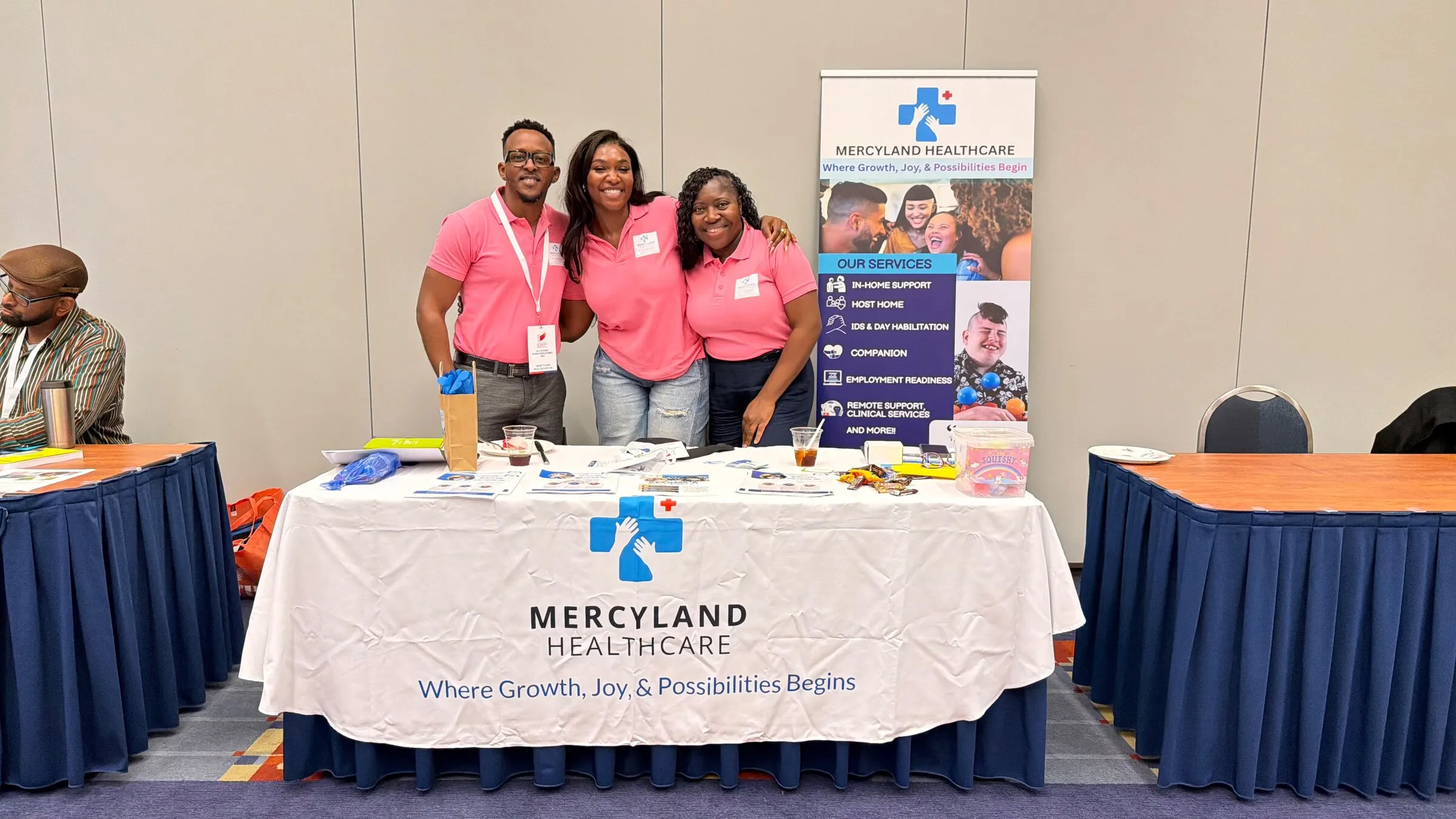
Mercyland Healthcare is one of the providers on the DDS list. If you are comparing agencies, you are welcome to ask us every question above. Visit Intake and Referrals or call 202-525-1563.
Last checked October 2026. Waiver rules, policies and provider lists change, so confirm any detail with your Service Coordinator or DDS before you act on it. Links go to official DC sources.